I was inspired by our recent workshop with Huddl – How to be an effective chair. It’s always a pleasure to run workshops with local organisations, where the focus is not just on learning but also on connecting. This session was no exception. The energy in the room was positive and motivating as Chairs from a wide range of boards came together to explore their role and what it really means to lead with confidence.
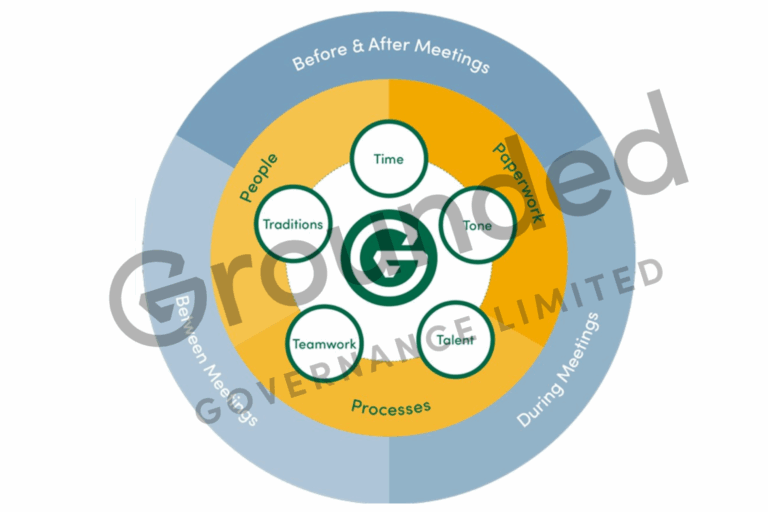
At Grounded, we’ve developed a Chairing Model built around the 5 Ts – Tone, Time, Talent, Traditions, and Teamwork. Although I’ve used this model in workshops and coaching for years, I’m always struck by how new conversations continue to deepen my own understanding.
One moment in this workshop stood out. While discussing Time, we reflected on how easy it is for a Chair to spend all their energy putting out small fires. One challenge lies in recognising which issues genuinely need attention and which ones will die out on their own. The analogy that emerged was: “How do you know which embers to put out, and which will extinguish themselves – ensuring none flare up again and again?” It was a lightbulb moment for many in the room, including me.
For smaller organisations especially, time is precious. Protecting it may mean setting clear boundaries. That could look like creating space before meetings to connect informally, holding one-on-ones with each board member between meetings to surface issues privately, or building in moments outside the boardroom to strengthen relationships. These practices help stop little sparks from turning into fires.
Another powerful discussion centred on showing appreciation. Chairs should thank their boards and management as a matter of good practice, but the real insight was this: thank people in the way they want to be thanked. For some, public acknowledgement is uplifting. For others, it’s uncomfortable, even anxiety-inducing. A handwritten card might mean the world to one person, while another may prefer a private thank you.
It reminded me of the “five love languages” – a reminder that connection, respect, and motivation come from understanding people as individuals. Taking just a couple of minutes to ask, “How do you like to be acknowledged for your effort?” can make all the difference.
For me, these conversations reinforced a simple truth: Chairs who pay attention to the talent around the table, who use their time carefully, and who show genuine respect and appreciation are far more likely to create boards that thrive.